

How Does a Fire Sprinkler Work? A Step-by-Step Guide to Fire Safety
When a fire starts, fire sprinkler systems are designed to react quickly to control flames, limit heat spread, and reduce risk to people and property. While these systems operate automatically, many building owners still have questions about what actually triggers them and how they function once activated.
Below, the experts at Firetech Sprinkler Corp. explain how fire sprinklers work, step by step, and how different system components and configurations are engineered to protect commercial and residential buildings.
Contact Firetech Sprinkler Corp. to learn more about our services.
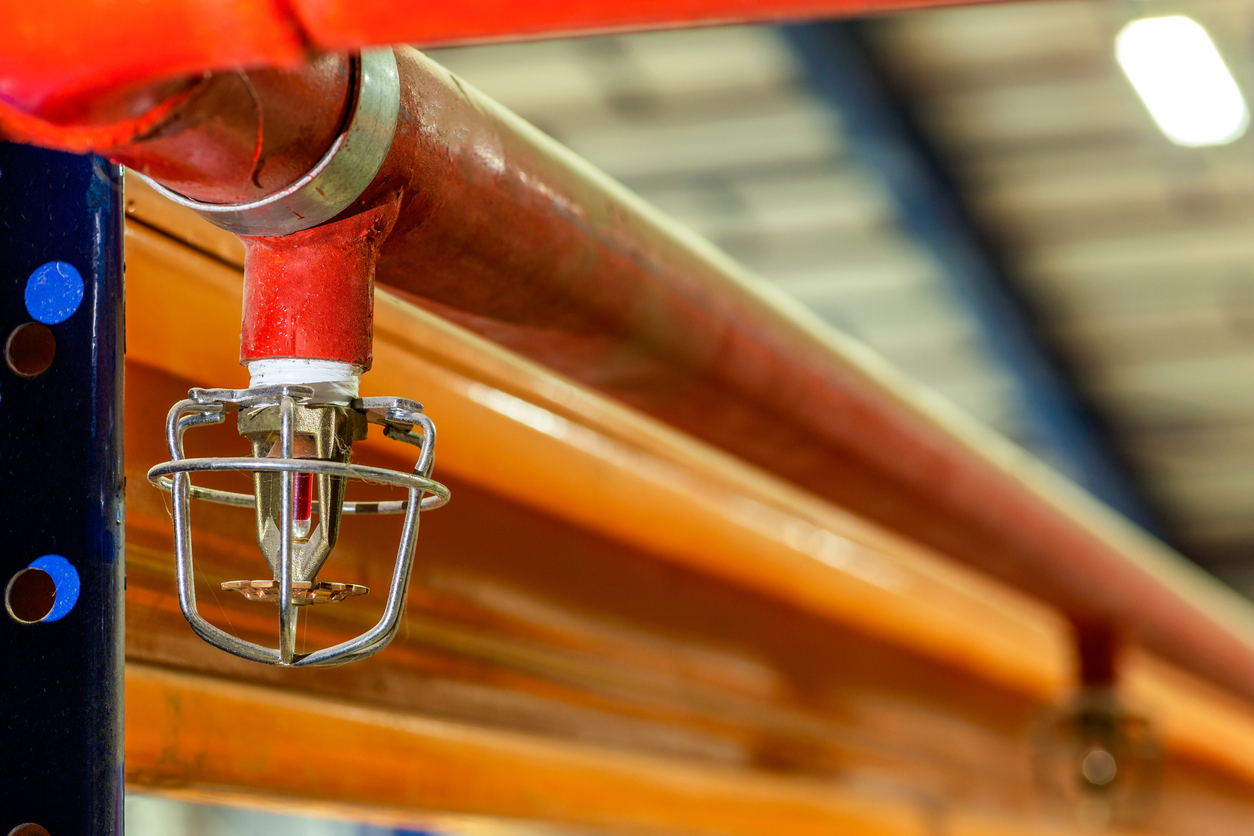
Components of a Fire Sprinkler System
Fire sprinkler systems rely on multiple coordinated components to detect heat, deliver water, and alert occupants and emergency responders. Each part plays a specific role in ensuring the system responds accurately and efficiently during a fire event.
- Sprinkler heads: Heat-sensitive devices that activate individually when exposed to high temperatures. Only sprinkler heads near the fire release water.
- Control valve: Regulates water flow throughout the system and must remain open for the system to function properly.
- Waterflow switch: Detects water movement within the piping and sends a signal to the fire alarm system to alert occupants and emergency responders.
- Fire department connection: Allows firefighters to supplement the system with additional water during emergency response operations.
Step 1: How Fire Sprinklers Detect Heat
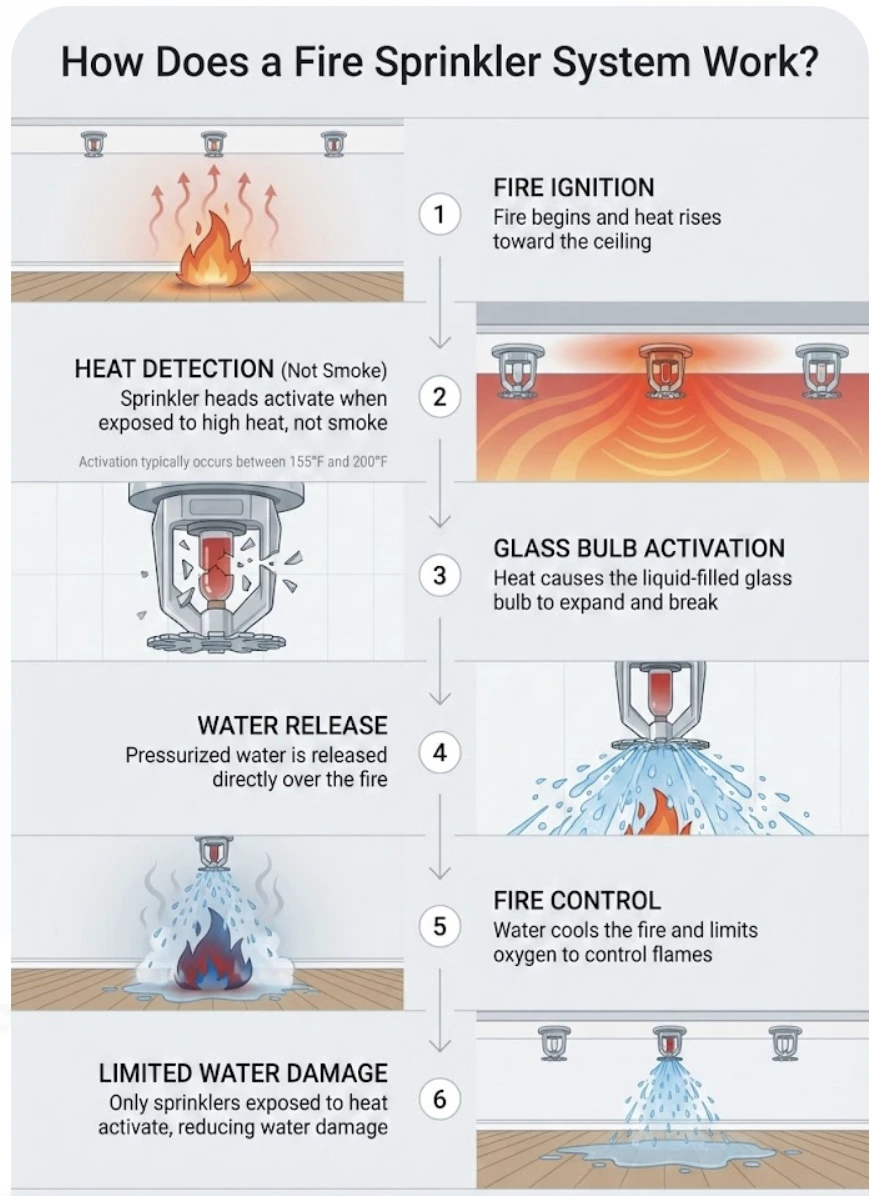
One of the most common misconceptions is that fire sprinklers are activated by smoke. In reality, fire sprinklers respond to heat, not smoke or fumes.
When a fire ignites, the air directly above the flames heats rapidly and rises toward the ceiling. As this hot air spreads, it increases the temperature around nearby sprinkler heads. Once a sprinkler head reaches its rated activation temperature, it triggers a mechanical reaction.
Most sprinkler heads contain a glass bulb filled with a glycerin-based liquid. When exposed to temperatures typically ranging from 155 to 200 degrees Fahrenheit, the liquid expands until the glass bulb shatters, releasing the water-sealing plug and activating the sprinkler.
Step 2: How Water Is Released From Fire Sprinklers
Each sprinkler head is connected to a network of pipes supplied by a reliable water source. When a sprinkler head activates, pressurized water flows immediately through the open head.
Water pressure is essential because it allows the spray deflector on the sprinkler head to distribute water in a controlled pattern. This spray cools the fire, reduces heat, and limits oxygen availability, helping to control or extinguish the fire before it spreads.
Step 3: How Fire Sprinklers Limit Water Damage
Another common myth is that all sprinklers activate at once. In reality, fire sprinkler heads operate independently. Only the sprinkler heads exposed to sufficient heat will activate.
In most fires, one or two sprinkler heads are enough to control the situation. This targeted response confines water discharge to the affected area, significantly reducing water damage compared to firefighting hoses, which discharge far more water at much higher flow rates.
Types of Fire Sprinkler Systems
While all fire sprinkler systems rely on heat detection and controlled water discharge, system designs vary based on building conditions, climate, and hazard type. Common system types include:
- Wet-pipe systems: Pipes remain filled with pressurized water for immediate discharge when a sprinkler activates. These are the most common systems.
- Dry-pipe systems: Pipes contain pressurized air or nitrogen, releasing water only after activation. These systems are ideal for cold environments where freezing is a concern.
- Foam suppression systems: Use a combination of water and foam concentrate to suppress fires in areas where flammable liquids or sensitive equipment are present.
Depend On Firetech Sprinkler Corp.
Firetech Sprinkler Corp. provides complete fire sprinkler solutions, from system design to long-term inspection and maintenance. With more than 30 years of experience, our team helps ensure systems remain compliant, reliable, and ready to perform when needed.
Our services include:
- System design by NICET-certified professionals
- Installation by certified sprinkler technicians
- Inspection, testing, and maintenance
- 24/7 emergency services
Contact Firetech Sprinkler Corp. to schedule services today.

Vermont Public Radio
Caledonia Spirits

North Country School Performing Arts Center

Shelburne Community Center and Library
Ace Hardware
Heritage Aviation
 View All Projects